Newsletter Subscribe
Enter your email address below and subscribe to our newsletter
Enter your email address below and subscribe to our newsletter

 BySonu
The 168.3.101 Router Network Setup Guide presents a methodical path from unboxing to optimization. It emphasizes verifying components, choosing wired or wireless setups, and confirming modem compatibility. Security is foregrounded with strong passwords, encryption, and guest isolation. Regular password rotation and device separation are recommended to prevent cross-contamination. Troubleshooting, firmware updates, and documentation complete the cycle, inviting careful adherence. A practical hinge remains that could redefine the initial configuration and its long-term stability.
Before inspecting the package contents, the user should ensure a stable workspace and a clean surface.
The procedure emphasizes unboxing etiquette and controlled handling, minimizing abrupt motions.
Remove packaging materials carefully, documenting each item, then verify completeness against the included checklist.
Dispose of debris responsibly, and preserve protective components for future storage.
A methodical approach supports freedom through orderly setup and clarity.
To begin, determine the desired connection method and prepare the appropriate hardware. The narrative proceeds with a structured, methodical outline: evaluate wired versus wireless options, confirm modem compatibility, and place cables or adapters accordingly. This section discusses naming conventions and discusses guest networks, clarifying identifiers and access boundaries while preserving user autonomy without extraneous detail. Clarity sustains purposeful, freedom-honoring setup.
Effective network security begins with strong Wi‑Fi configuration, robust passwords, and clear access controls.
The guide outlines disciplined steps: configure setup encryption to protect data in transit, enable guest access with isolated credentials, and implement password management to enforce regular rotations.
Device isolation within the network prevents cross‑device contamination, preserving freedom while maintaining disciplined access control.
Troubleshooting and fine-tuning focus on rapid issue resolution and performance improvement for the 168.3.101 router.
The process follows a structured sequence: identify symptoms, verify configurations, apply targeted fixes, and measure results.
A concise troubleshooting checklist guides steps, while firmware optimization ensures stability and speed.
Documentation records changes, enabling repeatable improvements without compromising user autonomy and network freedom.
The updater follows a formal procedure: access the router interface, locate Firmware Update, download the latest version, and approve installation. It notes Update cadence and Security hardening benefits, while preserving user autonomy and freedom in configuration choices.
Uncertain, the theory suggests guest networks may be unsupported on this model. They investigate unrelated topic and generic networking considerations; if available, a dedicated guest SSID can be enabled. The approach is structured, precise, and freedom-oriented.
Parental Controls can be enabled via the router’s interface; access a dedicated section, configure content filters and time limits, then apply a Firmware Update if features require it, ensuring settings persist across reboots for uninterrupted protection and autonomy.
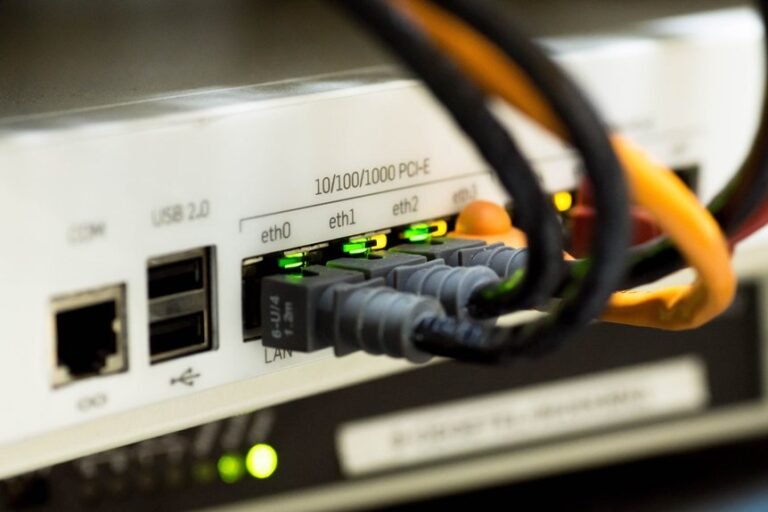
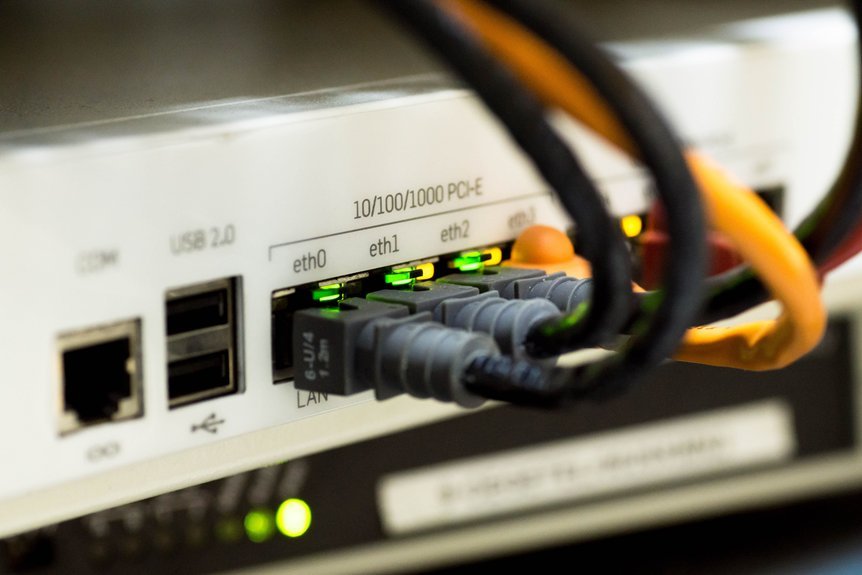
Like a ship’s stern, the router’s USB ports handle standard data transfer and charging tasks. It provides USB ports with moderate power delivery, suitable for peripherals and small devices, enabling power delivery for compatible accessories.
A factory reset will erase configurations; to preserve them, perform a backup first, then initiate reset via hardware button or web interface. The approach remains methodical, avoiding unrelated topic tangential concern, ensuring freedom while maintaining essential settings.
The guide concludes with a disciplined, methodical approach: unbox, prep, and verify components before configuring connections, whether wired or wireless. It emphasizes robust security—strong passwords, encryption, guest isolation—and regular password rotations to maintain integrity. Access control is tightly managed to prevent cross-contamination between devices. Troubleshooting is straightforward, firmware is kept current, and changes are documented to enable repeatable improvements. In practice, planning and discipline act like a compass, guiding a network to calm, reliable performance.