Newsletter Subscribe
Enter your email address below and subscribe to our newsletter
Enter your email address below and subscribe to our newsletter

 BySonu
The 168.18.7 Router Configuration Guide presents a precise, methodical approach to establishing a secure home or small-office network. It outlines steps for accessing the admin console, authenticating securely, and configuring essential settings for stability. The guide emphasizes input validation, channel optimization, and QoS as baseline principles. Ongoing maintenance, firewall rules, and parental controls are framed as safeguards rather than afterthoughts. The rationale for disciplined configuration invites further examination of each control path and its impact on WAN reliability.
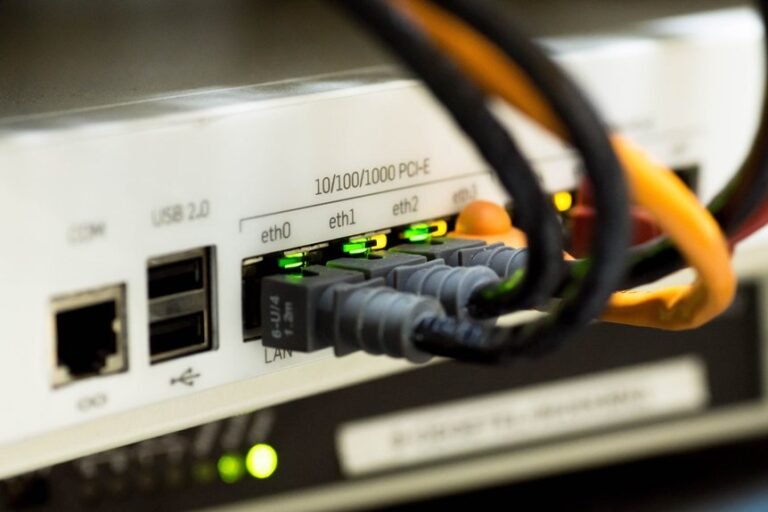
To access the 168.18.7 router admin console, users should connect a computer to the router via an Ethernet cable or use a wired or secure wireless connection.
The interface presents authentication prompts, then navigates to system status and configuration.
Accessibility features are enabled in settings, and firmware updates are checked and applied from the administration page.
Initial tweaks focus on establishing a stable, high-performance baseline by priming the router for predictable throughput and reliable connectivity.
The procedure emphasizes systematic input validation, channel selection, and QoS discipline to minimize contention.
Emphasize network optimization and firmware updates, ensuring firmware integrity before changes.
Documented checks verify stability, while reboot cycles confirm persistence; aim for repeatable, low-latency operation with scalable future-proofing.
Firewall basics and parental controls establish the foundational security posture for 168.18.7 by delineating permitted traffic, controlling access to external resources, and shaping user exposure. Firewall basics define rulesets, logging, and automatic blocking thresholds, while parental controls implement content filtering and time-based access. This framework supports secure, autonomous use, balancing freedom with predictable network boundaries for informed administration.
Ongoing maintenance, troubleshooting, and WAN stability focus on sustaining reliable network performance through systematic monitoring, proactive diagnostics, and standardized remediation workflows. The approach emphasizes long term monitoring, timely firmware updates, and disciplined tools and diagnostics usage. Network segmentation is employed to constrain faults, facilitate containment, and preserve service levels, while clear escalation paths and documented procedures ensure consistent, repeatable remediation across diverse WAN conditions.
Yes, VPN compatibility depends on the router’s firmware and supported protocols; alternative firmware may enable VPN use. The discussion notes potential mac cloning pitfalls and emphasizes verifying compatibility, security updates, and legal considerations for users seeking freedom.
To set up guest Wi-Fi safely, one should enable a dedicated guest network and segment it from the main network. Maintain router security by strong passwords, WPA3, firmware updates, and disable unnecessary services on the guest network.
Investigations suggest mesh extension feasibility hinges on router hardware capabilities. The claim: 168.18.7 supports extended mesh depends on PHY, CPU, and radio tunability; without adequate resources, reliability falters, limiting scalable deployments and user freedom.
To clone a MAC address, one can configure the device’s network interface settings and apply a MAC override; ensure compatibility with VPN setup. This method preserves identity while allowing flexible networking, supporting deliberate, freedom-focused technology use.
DNS settings that optimize streaming emphasize latency reduction and caching; they favor fast resolvers, VPN compatibility, and mesh support. They also consider guest isolation and mac cloning implications, ensuring stable performance without compromising privacy, reliability, or broadcast consistency.
The guide concludes with a measured appreciation for careful configuration, recognizing that incremental, deliberate changes yield dependable performance. By embracing disciplined input validation, clear firewall rules, and balanced QoS, users cultivate a steadier WAN experience without introducing unnecessary complexity. In this context, routine maintenance becomes a reassuring habit, not a burden, and potential concerns are gently mitigated through structured checks. Ultimately, a well-tuned network offers peaceful reliability, quietly supporting productive, uninterrupted connectivity.